The Tapo Door Sensor Mini is a compact contact sensor for monitoring doors, windows, cabinets, and other items that open or close.
This Tapo Door Sensor Mini review looks at what it can do, the required hub setup, and the tradeoffs to consider before adding it to a Tapo home.
Tapo T110 Sensor Review Summary
The quick verdict
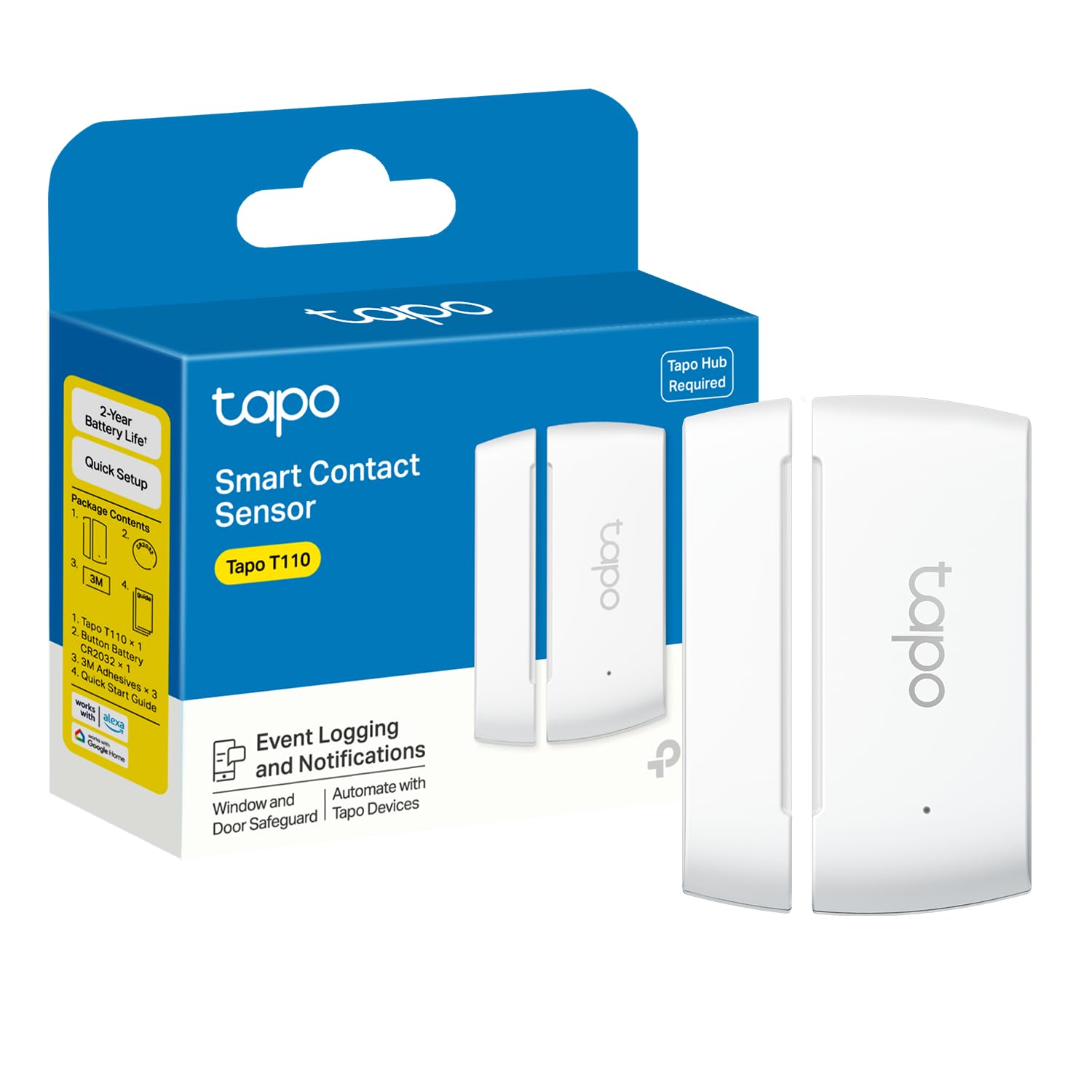
700+ ratings
Read Amazon ReviewsTapo Door Sensor T110
A good fit for Tapo households that want door, window, or cabinet alerts and automations, provided they already have or plan to add the required hub.
- Requires a Tapo Hub H100, sold separately, and a secured 2.4 GHz Wi-Fi network connection.
- Communicates with the hub using Sub-1G low-power wireless protocol; Tapo describes this as supporting wider coverage than Wi-Fi and extended battery life.
- Supports up to a 15 mm gap between the sensor components.
- Can monitor doors, windows, cabinets, fridges, mailboxes, and other items that open or close.

Pros
- Useful across a range of opening points, from entry doors to cabinets and mailboxes.
- Combines contact alerts with automation possibilities in a Tapo setup.
Consider before buying
- A Tapo Hub H100 is required and sold separately, so the sensor is not a standalone purchase.
- The stated battery-life figure depends on fewer than 30 triggers per day; heavier use may change replacement timing.
Read the full review summary
The T110 combines contact monitoring with phone notifications and Tapo Smart Actions, so an opened door or cabinet can do more than trigger an alert.
Its small battery and adhesive mounting suit discreet placements, while support for a gap of up to 15 mm may help with installations where the two sensor pieces cannot sit tightly together.
The key buying condition is the ecosystem requirement: operation depends on a Tapo Hub H100 and a secured 2.4 GHz Wi-Fi network.
It makes the most sense for someone already using Tapo devices or planning a hub-based setup; for a single sensor in a home without that hub, the additional equipment is part of the decision.
The buying factors
Tapo T110 Sensor Scorecard
Editorial scores reflect listed features and buyer fit; they are not laboratory measurements or customer ratings.
Monitoring flexibility
The listed uses span doors, windows, cabinets, fridges, mailboxes, and other open-close items.
Automation potential
It can act as a precondition for Tapo Smart Actions, including controlling lights or disabling a Tapo security camera when a door opens.
Setup convenience
Adhesive mounting is straightforward, but the sensor requires a separate Tapo hub and a secured 2.4 GHz Wi-Fi connection.
Battery design
A CR2032 is included, with up to two years of operation under the stated condition of fewer than 30 triggers per day.
Placement flexibility
The product supports a gap up to 15 mm and can be mounted with included adhesive, offering some flexibility in positioning.
Standalone value
Its usefulness depends on having the required hub, making it a more natural addition to a Tapo setup than a self-contained sensor purchase.
Key Features and Specifications of Tapo T110 Sensor
- Requires a Tapo Hub H100, sold separately, and a secured 2.4 GHz Wi-Fi network connection.
- Communicates with the hub using Sub-1G low-power wireless protocol; Tapo describes this as supporting wider coverage than Wi-Fi and extended battery life.
- Supports up to a 15 mm gap between the sensor components.
- Can monitor doors, windows, cabinets, fridges, mailboxes, and other items that open or close.
- Provides real-time phone notifications when a monitored door or window opens unexpectedly.
- Can serve as a precondition for Smart Actions, such as turning lights on or off or disabling a Tapo security camera when a door opens.
- Uses one included CR2032 battery, with up to two years of operation when triggered fewer than 30 times per day; mounting adhesive is included.
Pros and Cons of Tapo T110 Sensor
Pros
- Useful across a range of opening points, from entry doors to cabinets and mailboxes.
- Combines contact alerts with automation possibilities in a Tapo setup.
- Adhesive mounting avoids needing to fasten the sensor with screws.
- The included CR2032 battery has a stated lifespan of up to two years under a specific usage condition.
Consider before buying
- A Tapo Hub H100 is required and sold separately, so the sensor is not a standalone purchase.
- The stated battery-life figure depends on fewer than 30 triggers per day; heavier use may change replacement timing.
- Buyers should check the sensor placement and alignment on their chosen door or cabinet, especially where the two pieces may have a gap.
Who Should Buy Tapo T110 Sensor?
Good fit
Consider the T110 if you already have a Tapo Hub H100 and want to add open-close monitoring to a door, window, cabinet, or similar spot.
It can provide a phone alert and also become part of a Smart Action, which makes it more useful for a home where contact events should trigger another Tapo device.
It is also a reasonable fit when you want a small, adhesive-mounted contact sensor and can work within the hub-based setup.
Before choosing a mounting spot, measure the gap between the surfaces and check whether the sensor components can be placed in alignment within the supported 15 mm allowance.
Who should skip it
Skip this model if you need a contact sensor that works without a Tapo Hub H100, or if you do not want to add the hub and connect it to a secured 2.4 GHz Wi-Fi network.
It may not be the right fit if your routine is likely to trigger the sensor 30 or more times a day and you are relying on the stated maximum battery-life estimate.
How the Tapo T110 Sensor Fits a Hub-Based Home
Hub requirement shapes the purchase
The T110’s role is to add contact detection to a Tapo hub setup.
The required H100 connects the sensor to the home network, so buyers should account for the hub before deciding whether this is a convenient one-sensor upgrade or part of a broader system.
Contact events can become automations
The sensor can be used as a precondition for Smart Actions, with examples including switching lights or disabling a Tapo camera when a door opens.
That makes placement relevant to daily routines: a cabinet sensor, for instance, may be useful when opening it should trigger a related Tapo action.
Placement and gap deserve a quick check
A supported gap of up to 15 mm gives some leeway for mounting the two pieces on surfaces that do not meet flush.
Measure the intended location and check that the pieces can be positioned consistently as the door, window, or cabinet opens and closes.
Battery estimate depends on activity
The included CR2032 is rated for up to two years at fewer than 30 triggers per day. This gives infrequent-use locations a useful planning reference, while high-traffic openings may need more frequent battery checks.
Alternatives to Tapo T110 Sensor
The supplied alternative is an outdoor camera system, so it is useful only for buyers comparing broader security approaches rather than choosing another contact sensor.
Home Security Systems alternative
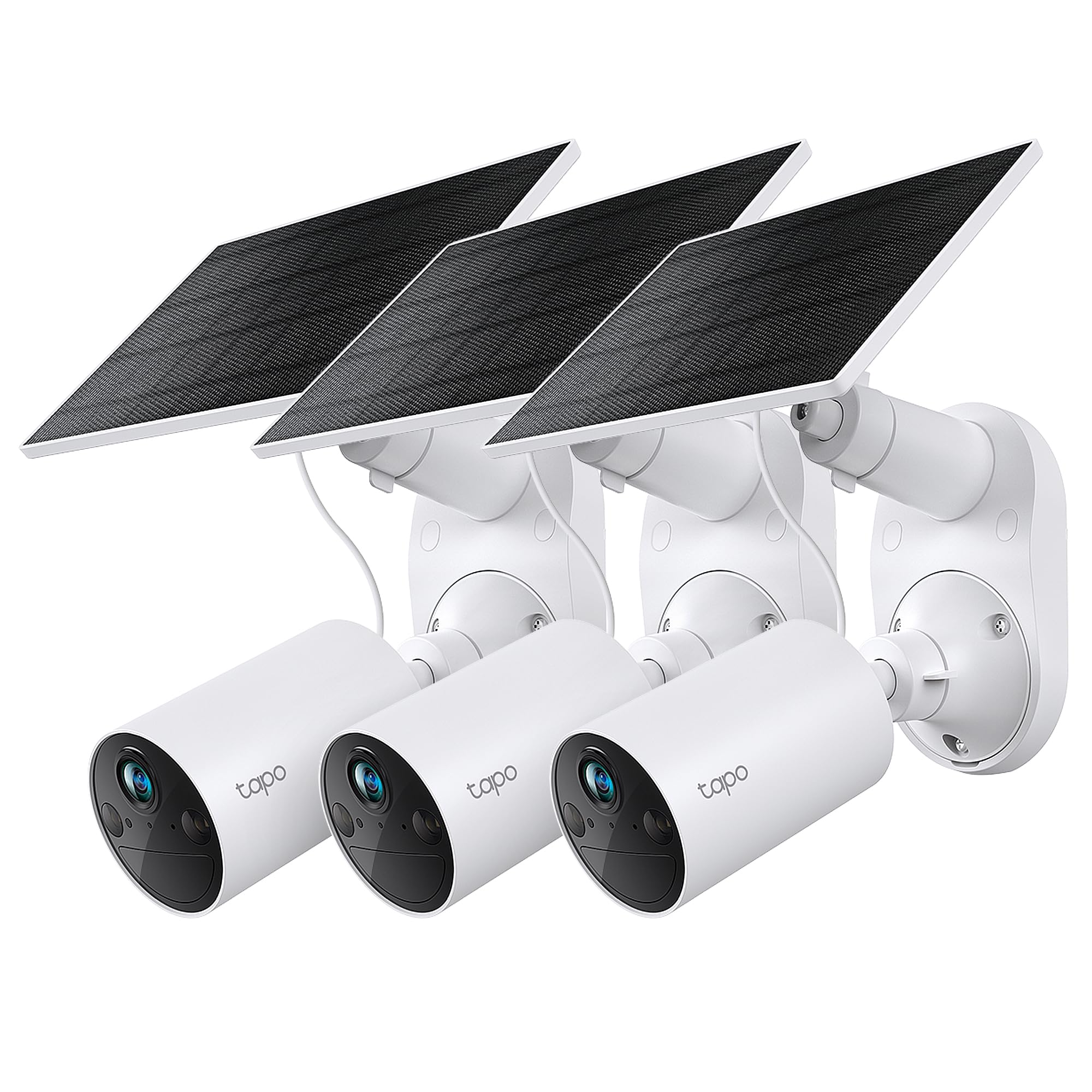
5,000+ ratings
Read Amazon ReviewsTapo SolarCam C402 KIT
Choose the T110 when the priority is monitoring whether an opening has changed state and linking that event to a Tapo action.
Consider the C402 KIT when visual outdoor monitoring is the goal; it adds video and solar power, rather than serving as a direct substitute for contact sensing.
- The Tapo SolarCam C402 KIT is a three-camera outdoor system with solar charging, 1080p video, person and motion detection, and local microSD storage support up to 512 GB or optional cloud storage.
- The Tapo T110 detects when a door, window, or other opening changes state and can trigger Tapo Smart Actions, but it requires a Tapo Hub H100.
Is Tapo T110 Sensor Worth It?
The Tapo Door Sensor T110 is worth considering for a Tapo household that wants straightforward contact alerts plus the option to build door-opening events into Smart Actions.
Its broad range of potential placements, adhesive mounting, and included battery make it a flexible sensor for selected doors, windows, and cabinets.
Buy it with the hub requirement and placement conditions in mind: the H100 is necessary, and the battery-life estimate assumes fewer than 30 triggers daily.
If that setup matches your home, the T110 is a practical addition; if not, look for a contact sensor compatible with the system you already use.
Your review at a glance
700+ ratings
Read Amazon ReviewsTapo Door Sensor T110
A good fit for Tapo households that want door, window, or cabinet alerts and automations, provided they already have or plan to add the required hub.
- Requires a Tapo Hub H100, sold separately, and a secured 2.4 GHz Wi-Fi network connection.
- Communicates with the hub using Sub-1G low-power wireless protocol; Tapo describes this as supporting wider coverage than Wi-Fi and extended battery life.
- Supports up to a 15 mm gap between the sensor components.
- Can monitor doors, windows, cabinets, fridges, mailboxes, and other items that open or close.