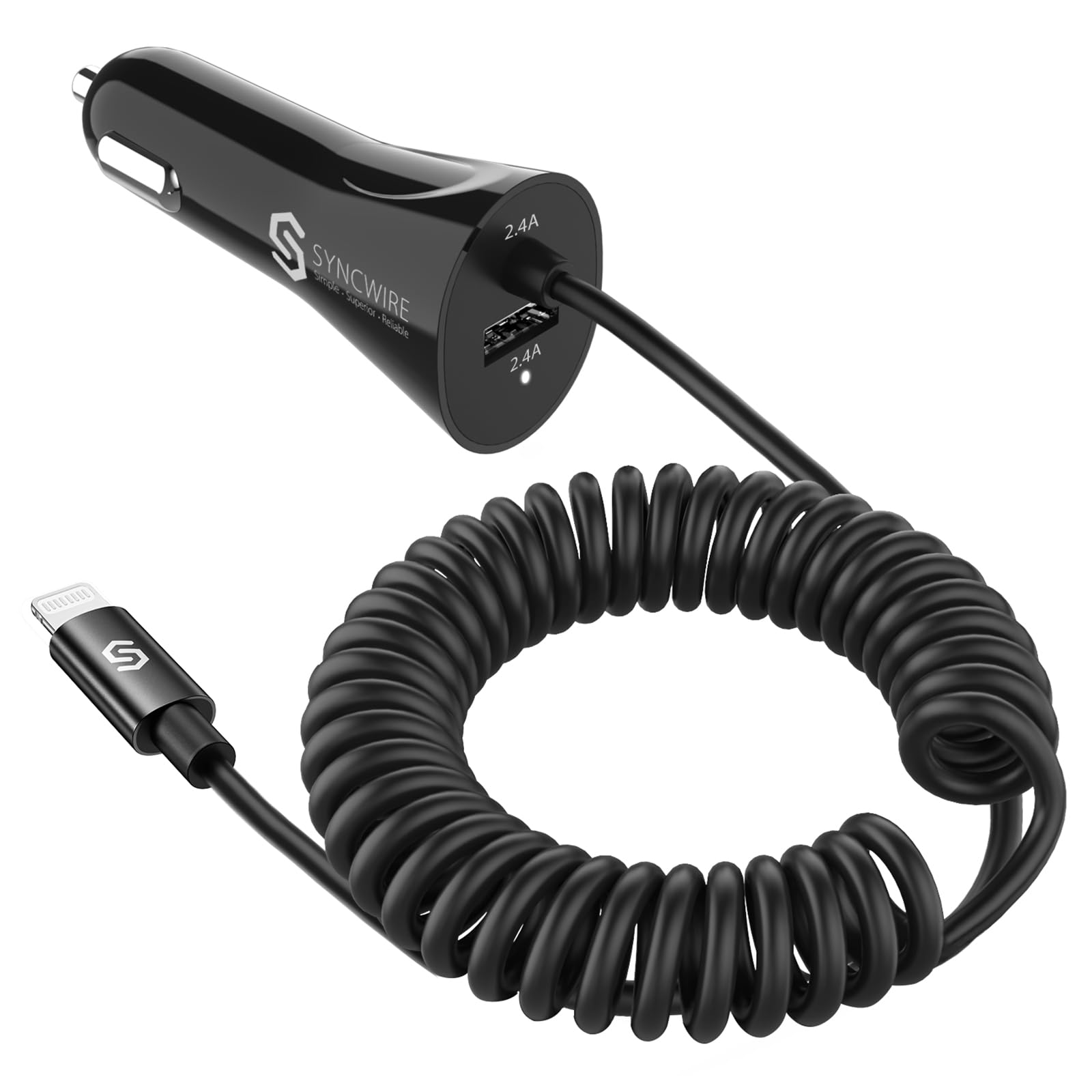
The Syncwire iPhone Car Charger review centers on a straightforward convenience: a built-in coiled Lightning cable for an iPhone plus a separate USB port for another device.
It is best suited to drivers whose everyday charging needs fit that two-device setup.
Syncwire Car Charger Review Summary
The quick verdict
13,000+ ratings
Read Amazon ReviewsSyncwire iPhone Car Charger
A practical choice for iPhone drivers who want an attached Lightning cable and a second USB charging port in the car.
- Built-in coiled Lightning cable with a natural reach of approximately 1.3 feet and an extension of up to 5 feet when pulled.
- One additional USB port for another USB-powered device.
- Supports charging two devices simultaneously, with up to 4.8A total output and automatic output adaptation.
- Compatibility includes listed iPhone 14 through iPhone 5 models, selected iPads and iPods, plus USB-powered devices through the additional port.

Pros
- The Lightning cable is attached, so an iPhone driver does not need to remember a separate cable for routine trips.
- A second USB port allows another device to charge at the same time.
Consider before buying
- The built-in lead uses Lightning, so it is a poor match for a driver whose primary phone charges through USB-C.
- The cable’s longer reach depends on pulling it out, while its coiled form may not suit every outlet location or passenger arrangement.
Read the full review summary
Syncwire combines a vehicle adapter, an attached Lightning cable, and an additional USB port in one unit.
The built-in cable extends when needed and retracts to a shorter natural length, which can reduce the need to keep a separate Lightning lead in the car.
Its appeal is strongest for iPhone owners who want a familiar wired connection and occasional charging for a passenger’s or another USB-powered device.
The 12–24V input range is intended for a variety of vehicles, while the cable’s case compatibility and the outlet’s position are practical fit details to consider before buying.
The buying factors
Syncwire Car Charger Scorecard
Editorial scores reflect listed features and buyer fit; they are not laboratory measurements or customer ratings.
Everyday convenience
The attached Lightning lead and extra USB port cover two common in-car charging needs without requiring two separate loose cables.
Two-device flexibility
The charger can power two devices at once, with output adapting to the connected devices, up to the stated combined maximum.
Cable reach
The coiled cable naturally reaches about 1.3 feet and can extend to 5 feet when pulled, providing useful reach with a variable amount of slack.
iPhone compatibility
The listed compatibility spans several Lightning-equipped iPhone generations and some iPad and iPod models; buyers should confirm their device uses Lightning.
Vehicle fit
The 12–24V input range covers many vehicle outlets, though the outlet’s location and nearby space will affect cable comfort.
Charging versatility
The second USB port accepts other USB-powered devices, but the built-in cable is specifically Lightning, so the arrangement is less universal for mixed-device households.
Key Features and Specifications of Syncwire Car Charger
- Built-in coiled Lightning cable with a natural reach of approximately 1.3 feet and an extension of up to 5 feet when pulled.
- One additional USB port for another USB-powered device.
- Supports charging two devices simultaneously, with up to 4.8A total output and automatic output adaptation.
- Compatibility includes listed iPhone 14 through iPhone 5 models, selected iPads and iPods, plus USB-powered devices through the additional port.
- Designed for vehicle outlets with DC 12–24V input.
- Polycarbonate shell, a white LED indicator, and a stated smart IC and thermal material design.
Pros and Cons of Syncwire Car Charger
Pros
- The Lightning cable is attached, so an iPhone driver does not need to remember a separate cable for routine trips.
- A second USB port allows another device to charge at the same time.
- The coiled cable can stay relatively compact when not fully extended and offers extra reach when pulled.
- The listed case compatibility includes aftermarket cases, including LifeProof and OtterBox styles.
Consider before buying
- The built-in lead uses Lightning, so it is a poor match for a driver whose primary phone charges through USB-C.
- The cable’s longer reach depends on pulling it out, while its coiled form may not suit every outlet location or passenger arrangement.
- Charging two devices divides the available output; the stated maximum is shared rather than a separate maximum for each connection.
Who Should Buy Syncwire Car Charger?
Good fit
Consider it if you drive an iPhone with a Lightning connector and want a ready-to-use cable in the car.
The integrated lead is especially convenient for regular commutes, navigation, or keeping a phone powered without storing a separate cable in the cabin.
The extra USB port makes the layout more useful for a passenger or a second USB-powered device.
Check that the vehicle outlet is within comfortable cable reach and that the coiled lead can extend without being stretched across a control or obstructing the way you use the cabin.
Who should skip it
Skip this design if your main phone uses USB-C or if you want a built-in cable that can connect directly to several connector types.
The attached lead is Lightning, and the additional port is the option for other USB-powered devices.
It may also be a less convenient choice if your charging setup regularly needs more than two devices at once or if a fixed, longer cable route is important.
In that case, check the number and type of connections offered by another charger before choosing.
How the Syncwire Car Charger Fits Daily Driving
The attached Lightning cable
An integrated cable is useful when the driver’s phone consistently uses the same connector: the lead remains with the adapter, which can make quick trips simpler.
The coiled construction is designed to keep some slack gathered when the cable is not extended, while its longer reach gives placement flexibility.
In a vehicle with a distant outlet, measure the route to the phone before relying on the maximum extension.
Sharing power across two devices
The built-in cable and USB port allow two devices to charge simultaneously, with up to 4.8A total output and automatic adjustment to each device.
That gives the adapter practical flexibility for a driver and passenger, but the combined figure is not a promise of a fixed rate for each connection.
The devices being charged and their placement will shape how useful the arrangement is on a particular drive.
Compatibility and vehicle fit
The listed Lightning compatibility covers a broad range of older and newer iPhone generations, along with selected iPads and iPods. For the second port, the product description identifies USB-powered devices such as Android phones, tablets, and power banks.
Confirm your device’s connector and the vehicle’s outlet type before purchasing; the stated input range is DC 12–24V.
Cable reach and cabin layout
A short coiled reach can help keep a charging lead from sprawling across the console, while the ability to extend up to 5 feet can help when the phone sits farther from the socket.
The tradeoff is that the cable remains attached to the outlet, so the most comfortable setup depends on where the outlet sits and where the phone is stored.
Case compatibility is listed for aftermarket cases, but checking the connector area and route in your own cabin is still sensible.
Alternatives to Syncwire Car Charger
Cell Phone Automobile Chargers alternative
25,000+ ratings
Read Amazon ReviewsLISEN 4-in-1 Retractable Car Charger
Choose the Syncwire if an attached Lightning cable for an iPhone is the main priority and two-device charging is enough.
Consider the LISEN if you need a broader multi-device arrangement and its retractable cable and outlet design suit your vehicle.
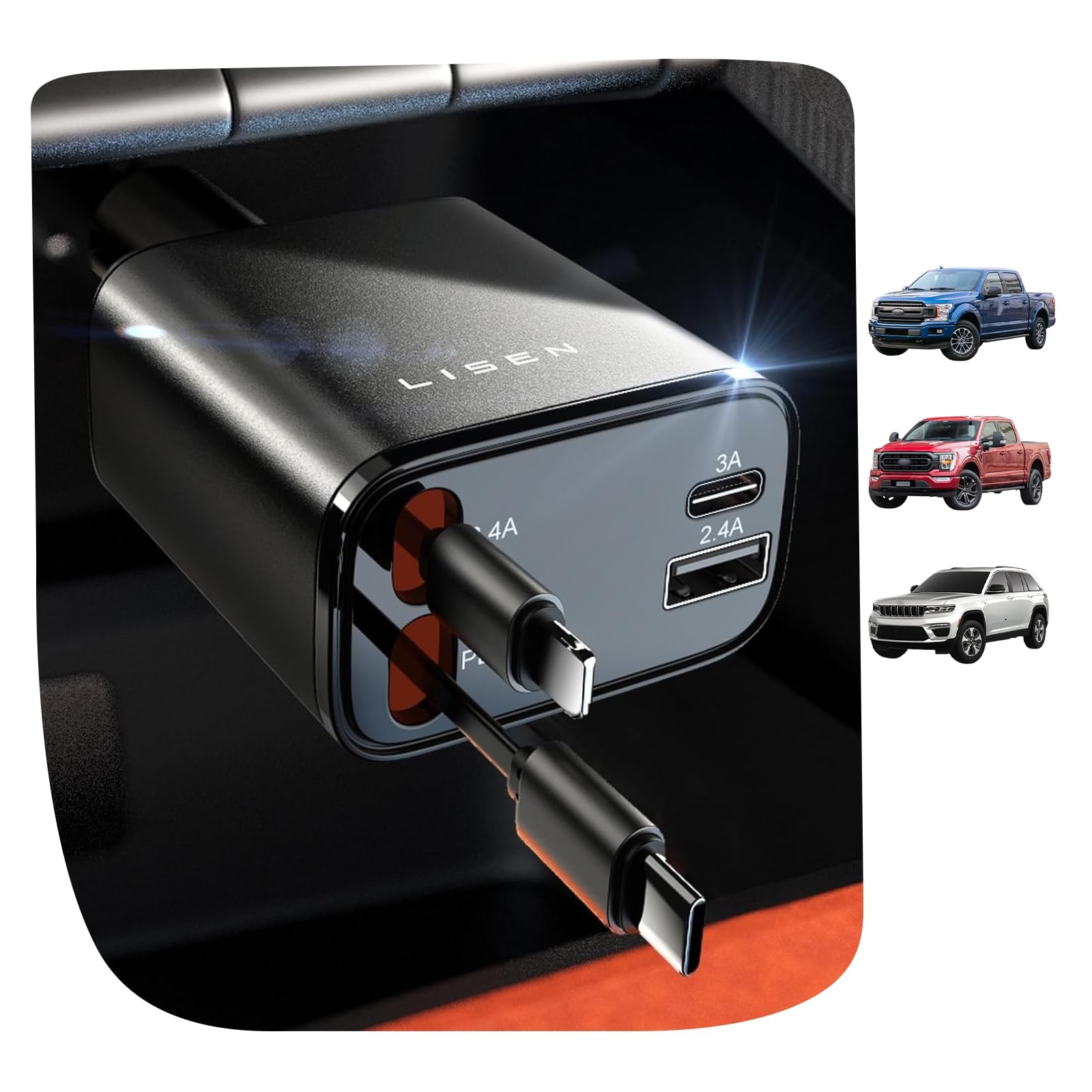
- The LISEN has a retractable cable, dual USB ports, and is described as supporting up to four devices, with compatibility listed for USB-C and USB-A devices.
- Its description also specifies a 12V socket and a 180-degree rotating plug.
- The Syncwire combines one built-in Lightning cable with one additional USB port and is oriented toward Lightning iPhones.
Cell Phone Automobile Chargers alternative
4+ ratings
Read Amazon ReviewsRokform Magnetic Wireless Car Charger
The Syncwire is the more direct fit for someone who wants wired Lightning charging from the vehicle outlet.
Consider the Rokform if mounting and wireless charging are the priority and your phone case and available USB-C power source fit its requirements.
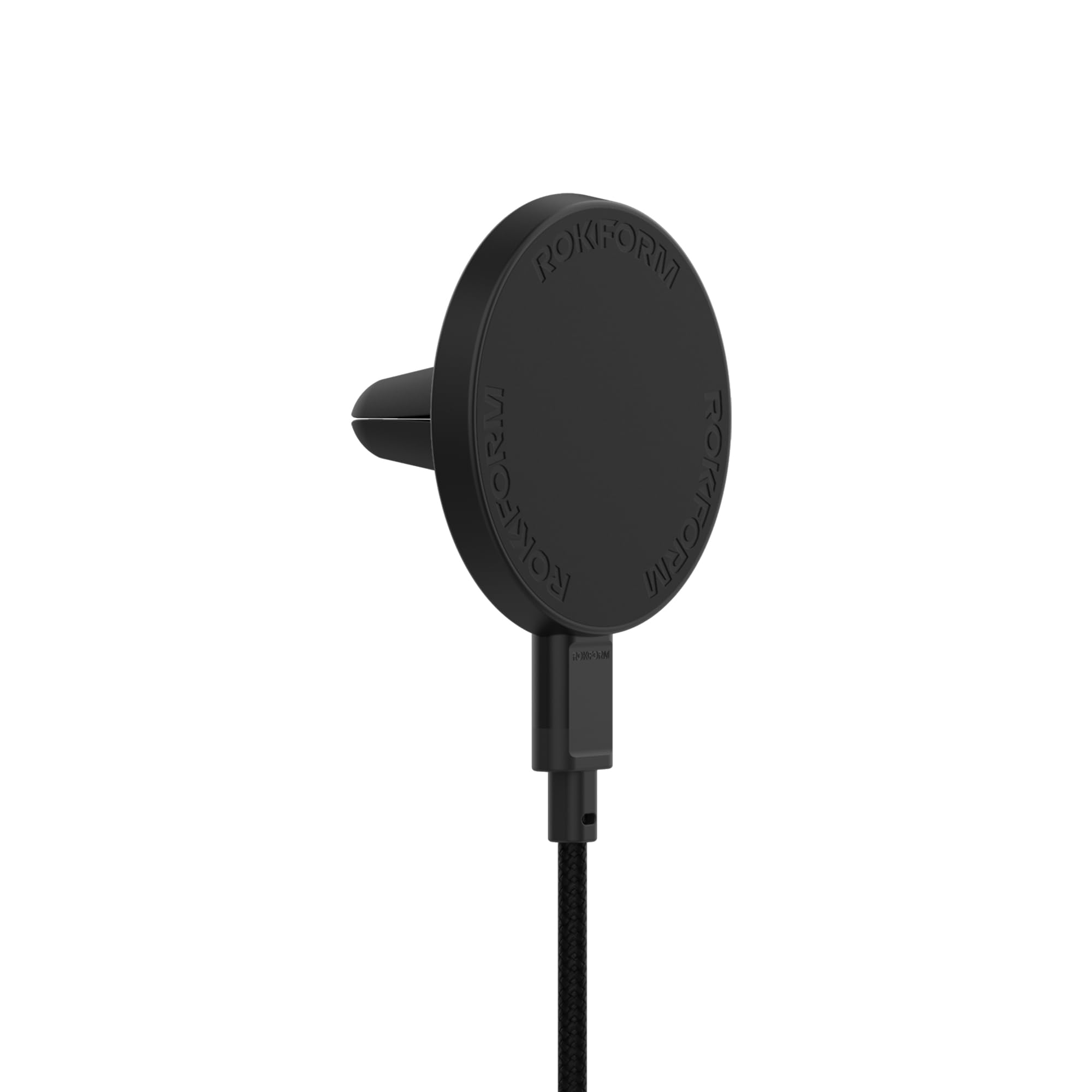
- The Rokform combines a vent mount with magnetic wireless charging up to 15W and includes a USB-C cable.
- It recommends a USB-C power source and a MagSafe phone case for best results.
- The Syncwire charges through its built-in Lightning cable or its additional USB port; its described setup does not include a phone mount.
Is Syncwire Car Charger Worth It?
The Syncwire iPhone Car Charger is worth considering for drivers with a Lightning-equipped iPhone who want a cable kept in the car and a second port for another device.
Its coiled lead, two-device layout, and 12–24V input give it a practical everyday role.
Before buying, confirm your phone uses Lightning, your vehicle outlet is within comfortable reach, and two connections are enough for your routine.
Drivers who need USB-C on the built-in lead or a wider multi-device setup should choose a design that explicitly provides those connections.
Your review at a glance
13,000+ ratings
Read Amazon ReviewsSyncwire iPhone Car Charger
A practical choice for iPhone drivers who want an attached Lightning cable and a second USB charging port in the car.
- Built-in coiled Lightning cable with a natural reach of approximately 1.3 feet and an extension of up to 5 feet when pulled.
- One additional USB port for another USB-powered device.
- Supports charging two devices simultaneously, with up to 4.8A total output and automatic output adaptation.
- Compatibility includes listed iPhone 14 through iPhone 5 models, selected iPads and iPods, plus USB-powered devices through the additional port.